Beyond the Spotlight: What Theater Teaches Us About Risk, Strategy, and the Forex Market
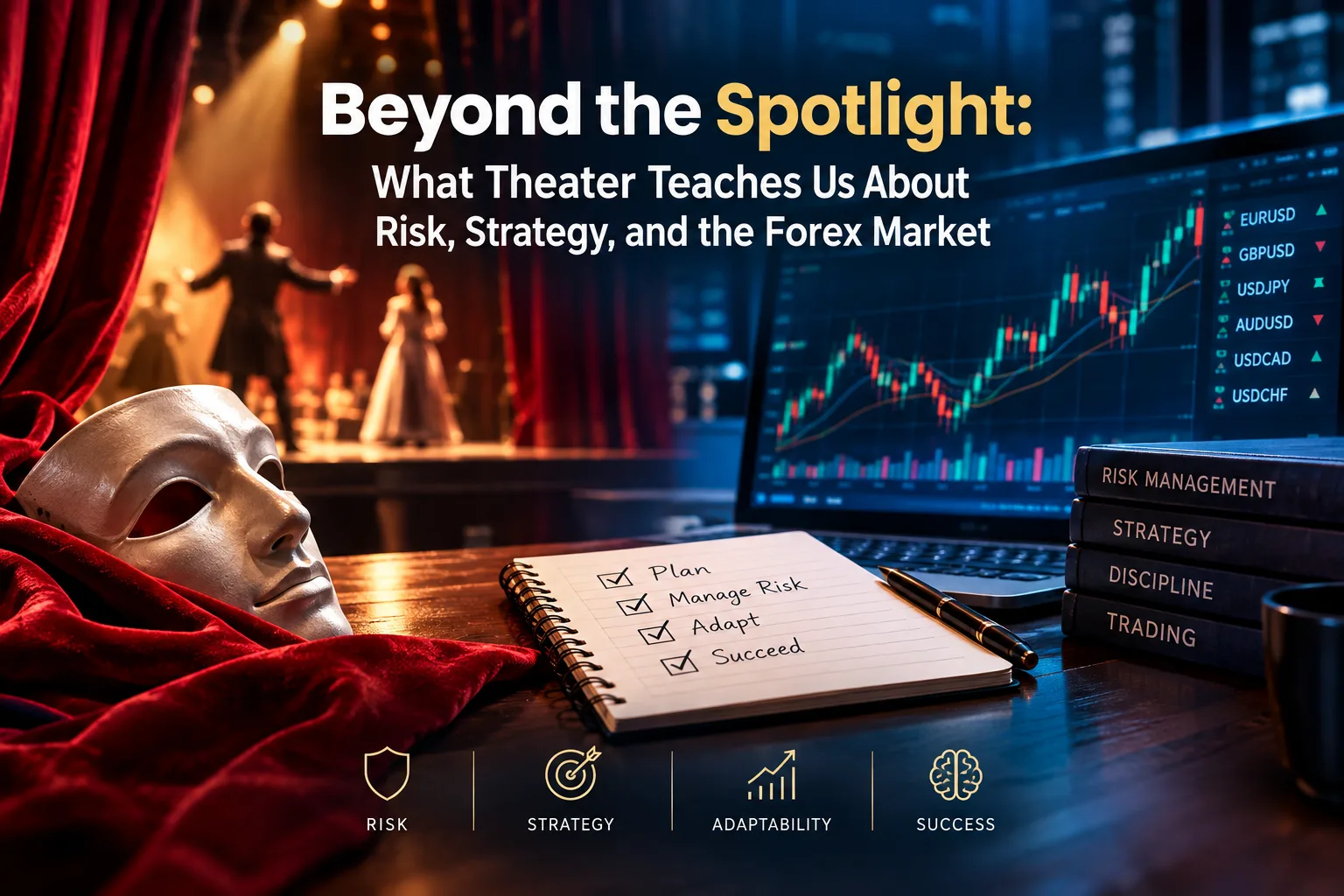
Discover how theater teaches forex traders valuable lessons about risk management, strategic planning, emotional discipline, market analysis, and adaptability in uncertain conditions.
Theater and financial markets may seem worlds apart, but both require preparation, discipline, and the ability to make decisions under uncertain conditions. Actors perform before live audiences, adapting to unexpected moments while remaining faithful to a production’s overall direction. Forex traders face a similar challenge when navigating changing currency prices, economic announcements, and unpredictable market reactions.
Although their objectives differ, these two fields offer valuable lessons about managing risk, understanding the environment, and improving performance. Exploring their similarities reveals why preparation and adaptability matter in both artistic and financial pursuits.
Preparation: The Foundation of Every Successful Performance
A theatrical production rarely succeeds without extensive preparation. Actors study their characters, rehearse their lines, and coordinate with directors and fellow performers. These preparations help them respond naturally when unexpected situations arise during a live performance.
Forex trading also benefits from a structured approach. Before opening a position, traders can analyze market conditions, identify potential entry and exit points, and determine how much capital they are prepared to risk.
A trading plan establishes boundaries before emotions influence decisions. It may specify the conditions required to enter a trade, the circumstances that would invalidate an analysis, and the maximum acceptable loss.
Preparation cannot eliminate uncertainty, but it can reduce avoidable mistakes. Just as rehearsals help actors become familiar with a production, reviewing historical market data and testing trading strategies can help traders understand how their methods might perform under different conditions.
The central lesson is straightforward: preparation does not guarantee a favorable outcome, but it creates a stronger foundation for responding to unexpected developments.
Risk Management: Understanding What Can Go Wrong
Every live performance carries potential risks. Technical equipment can malfunction, an actor may forget a line, or an unexpected interruption may disrupt the scene. Professional productions prepare for these possibilities instead of assuming everything will proceed perfectly.
Financial markets require the same awareness. Currency prices can change sharply following central bank announcements, inflation reports, employment figures, or geopolitical developments. Even a carefully researched trade can result in a loss.
Risk management helps traders define their exposure before entering the market. Common approaches include setting stop-loss orders, adjusting position sizes, limiting leverage, and avoiding excessive concentration in a single position.
The objective is not to eliminate every possible loss. Instead, it is to ensure that an unfavorable outcome does not create consequences beyond the trader’s financial capacity.
Theater offers a useful comparison. A production becomes more resilient when its team anticipates potential problems and establishes ways to address them. Similarly, traders should consider what could go wrong rather than focusing exclusively on potential profits.
A profitable trade does not necessarily indicate a good decision, just as an unsuccessful trade does not automatically indicate a poor one. Evaluating the process, the level of risk, and the quality of the original reasoning provides a more useful basis for improvement.
Strategy and Improvisation: Knowing When to Adapt
A theatrical script provides structure, but live performances do not always unfold exactly as rehearsed. Actors must sometimes respond to unexpected pauses, missed cues, or changes in the rhythm of a scene.
Trading requires a comparable balance between following a strategy and responding to changing conditions.
Some traders focus on price trends, while others look for breakouts, reversals, or longer-term economic developments. Each approach depends on particular assumptions about how the market behaves.
However, market conditions can change. A strategy designed for a trending market may produce different results when prices move sideways. A major economic announcement can also alter market behavior within minutes.
The challenge is distinguishing a justified adjustment from an emotional reaction.
For example, a trader who sees prices moving against an open position should reassess the situation according to predefined rules. Removing a stop-loss order or increasing exposure simply to avoid accepting a loss can create additional risk.
In theater, improvisation works best when performers understand the production’s underlying structure. Likewise, traders need a clear strategy to recognize when adaptation is appropriate.
Discipline does not mean following a plan regardless of circumstances. It means making changes for identifiable reasons rather than reacting impulsively to every price movement.
Understanding the Environment: Context Changes Everything
A theatrical performance depends on more than the actors’ dialogue. Lighting, sound, set design, timing, and audience expectations influence how each scene is experienced.
Foreign exchange markets are similarly shaped by interconnected factors. Interest rates, inflation, employment data, monetary policy, and geopolitical developments can all influence currency prices.
Importantly, the same economic announcement can produce different market reactions depending on expectations. A positive economic report, for example, may fail to strengthen a currency if investors had anticipated an even stronger result.
This makes context essential. Traders need to interpret new information alongside existing market conditions rather than treating every headline as an independent trading signal.
The appropriate perspective also depends on the trading approach. Short-term traders may focus on immediate price movements and transaction costs, while longer-term traders may pay greater attention to economic trends and central bank policies.
Just as a theatrical scene makes more sense within the larger story, an individual price movement often becomes more meaningful when examined within the broader economic environment.
Choosing the Right Tools and Service Providers
Theater companies depend on suitable venues, technical equipment, and reliable production systems. In financial markets, traders also rely on tools and service providers that support their activities.
Charting platforms, economic calendars, analytical software, and brokerage services each play different roles. Understanding their features and limitations helps traders make more informed choices.
Selecting a forex broker requires particular attention. Relevant considerations include regulatory status, trading costs, available instruments, platform functionality, deposit and withdrawal procedures, and the legal entity providing the service.
A structured Forex broker comparison can help readers examine differences between providers and identify the details that deserve further investigation. BrokerDecider offers broker-related information and comparison resources that can serve as a starting point for this research.
However, traders should verify important details through official regulatory registers and the provider’s current documentation. Regulatory protections and account conditions may differ depending on the jurisdiction and legal entity involved.
Readers researching the HYCM broker can similarly examine its applicable regulatory arrangements, trading conditions, fees, and account terms before deciding whether the service suits their requirements.
The objective is not to assume that one provider is suitable for everyone. It is to understand the available options and evaluate them against individual needs.
Emotional Discipline: Staying Focused Under Pressure
Live theater requires performers to remain composed when something unexpected happens. Losing concentration after a minor mistake can affect the rhythm of a scene, while maintaining focus allows the performance to continue.
Trading presents similar psychological challenges. A series of losses may encourage someone to pursue quick recovery through increasingly aggressive positions. Conversely, several profitable trades can create overconfidence and lead to unnecessary risks.
Neither reaction necessarily reflects a sound assessment of market conditions.
Emotional discipline does not mean eliminating fear or excitement. It means preventing temporary feelings from overriding established decision-making rules.
Traders can support this process by setting risk limits in advance, keeping a trading journal, reviewing performance regularly, and taking breaks when frustration affects their judgment.
Theater professionals also learn through reflection. After a performance, they evaluate what worked, identify weaknesses, and consider how to improve.
In both fields, consistent development depends on examining experience honestly rather than allowing a single success or failure to determine future decisions.
Learning From Mistakes and Improving Over Time
Theater productions often improve through repeated performances. Directors refine scenes, actors adjust their delivery, and technical teams make changes based on experience.
Forex traders can follow a similar process by reviewing their decisions and documenting the reasoning behind each position.
A useful trading journal records the market conditions, entry and exit decisions, risk level, and outcome of each trade. Over time, these records may reveal recurring problems, such as entering positions too early, trading too frequently, or abandoning established rules during periods of volatility.
It is also important to distinguish between a poor decision and an unfavorable outcome. A trade can lose money despite following a reasonable strategy, while an undisciplined trade can occasionally generate a profit.
Evaluating decisions over a meaningful sample of trades provides a more reliable basis for improvement than focusing on isolated results.
Although learning cannot remove market uncertainty, it can help traders identify weaknesses and reduce avoidable errors.
Conclusion: Preparation Creates Opportunities for Better Decisions
Theater and forex trading demonstrate the importance of preparation, risk awareness, emotional discipline, and adaptability. Actors need to understand their scripts while remaining responsive to unexpected events. Traders need a clear strategy while recognizing that financial markets rarely behave with complete predictability.
In both environments, success depends on more than confidence or talent. It requires understanding the circumstances, preparing for possible difficulties, and learning from experience.
For anyone exploring financial markets, the connection between theater and trading offers a valuable perspective: thoughtful preparation cannot guarantee success, but it can create a stronger foundation for making informed decisions in uncertain conditions.
Source: BrokerDecider