Theater and financial markets may seem to belong to completely different worlds. One is built around actors, scripts, directors, lighting, and live performances, while the other revolves around charts, economic data, prices, and trading decisions. Yet, beneath the surface, both require something remarkably similar: preparation, timing, discipline, and the ability to make decisions under pressure.
A successful theater performance rarely depends on improvisation alone. Actors rehearse their roles, directors study the script, and the entire production team prepares for different situations before the curtain rises. In the Forex market, traders face a similar challenge. Before entering a position, they need to understand market conditions, evaluate risk, choose suitable trading tools, and determine whether their broker provides the conditions they need.
This is where the connection between the theater stage and Forex trading becomes interesting.
Every Performance Begins Before the Curtain Rises
For an audience, a theater performance begins when the curtain opens. For the performers, however, the process began much earlier.
The script had to be studied, scenes rehearsed, technical elements coordinated, and potential problems considered. The quality visible to the audience is ultimately the result of preparation that happened behind the scenes.
Forex trading follows a similar principle.
A trader may see only a price chart when opening a trading platform, but numerous decisions should already have been made. What is the trading strategy? How much capital is available? What level of risk is acceptable? Which instruments are appropriate? What are the costs associated with trading?
Another important decision comes before the first position is opened: choosing a broker.
A broker provides the infrastructure through which traders access the market, and trading conditions can vary considerably from one company to another. Account types, spreads, commissions, platforms, available instruments, leverage, minimum deposits, and other conditions may differ.
For this reason, selecting a broker deserves the same kind of preparation that a production team puts into a performance.

The Director Looks at the Entire Stage
A theater director cannot evaluate a performance by looking only at the lead actor.
Lighting, sound, stage design, timing, supporting performers, and technical coordination can all influence the final result. A single strong element does not necessarily make an entire production successful.
The same principle applies when evaluating a Forex broker.
A low spread may look attractive, but it is only one part of the overall trading environment. A trader should also consider whether the account structure matches their strategy, whether commissions apply, which platforms are available, what instruments can be traded, and what rules apply to deposits and withdrawals.
This is one reason Forex broker comparison can be useful.
Instead of examining one broker in isolation, traders can place several options side by side and identify the differences that actually matter to their own trading approach.
The goal is not simply to find a broker that looks attractive on paper. The goal is to understand the available choices before making a decision.
Every Actor Has a Different Role
One of the fundamental principles of theater is that every actor has a particular role. A technique that works perfectly for one performer may not necessarily work for another.
Trading is similar.
There is no single account type or broker that is automatically suitable for every trader.
A short-term trader may pay particular attention to spreads and execution conditions. Another trader may be more interested in the range of available instruments or platform compatibility. Someone holding positions for longer periods may pay closer attention to overnight financing or swap conditions.
Therefore, asking “Which broker is the best?” may not always be the most useful question.
A better question is:
“Which broker offers conditions that fit my trading requirements?”
That shift in perspective encourages traders to evaluate brokers according to their own needs rather than simply following general rankings or promotional claims.
The Performance Depends on More Than the Lead Actor
When audiences watch a play, they naturally focus on the performers standing under the spotlight. Yet the final production depends on many people who may never appear on stage.
Forex trading also has a visible and an invisible side.
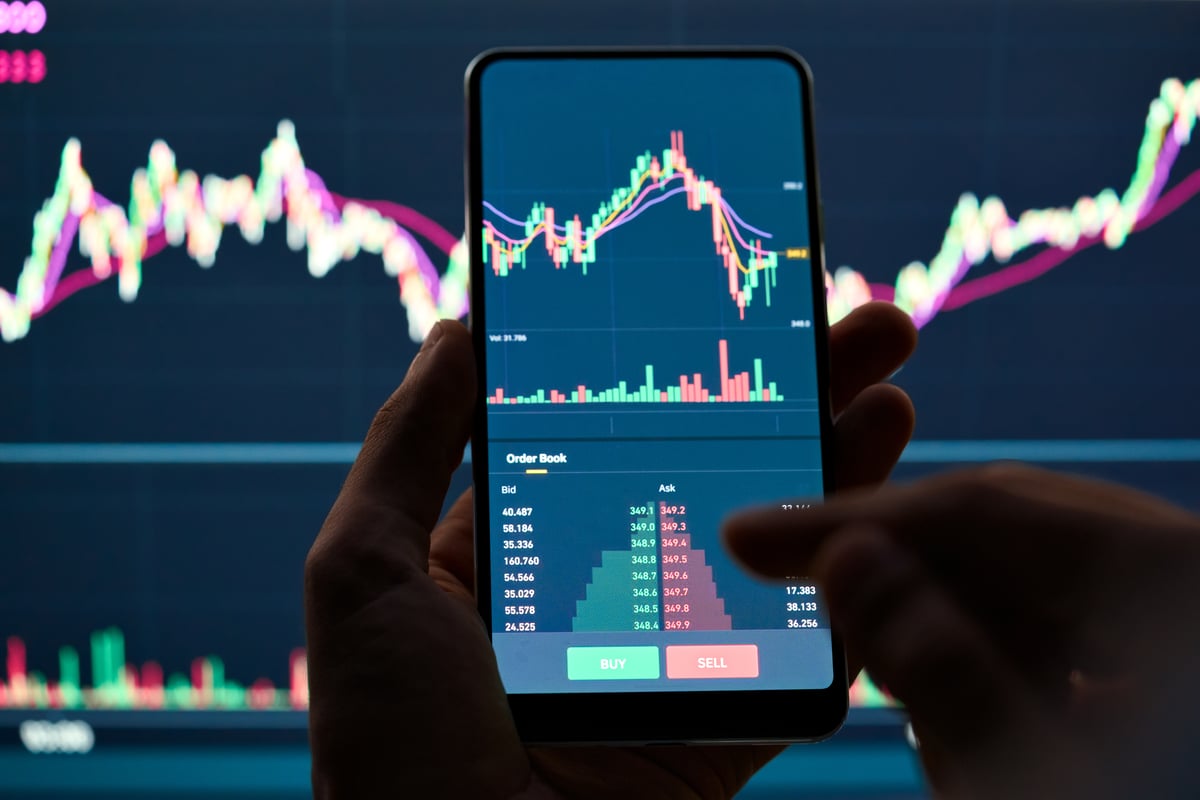
The visible side is the trading platform: charts, prices, order buttons, and account information. Behind those elements are market liquidity, order execution, technology, economic events, trading conditions, and risk-management decisions.
A trader therefore needs to understand the environment in which a trade takes place.
This does not mean that a particular broker can determine whether a trade will be profitable. Market movements remain uncertain, and even a well-planned position can move against the trader.
Instead, understanding the trading environment allows traders to make more informed choices about where and how they participate in the market.
Why Comparing Brokers Can Change the Decision
Imagine a theater group looking for a venue for its next production.
The cheapest venue may not necessarily be the right choice. The group may also need to consider location, capacity, technical equipment, stage dimensions, scheduling, and the specific requirements of the performance.
Choosing a Forex broker requires a similarly broad view.
A useful comparison may include:
| Factor | Why It Matters |
|---|---|
| Account Types | Different accounts may have different trading conditions |
| Spreads | They can affect the cost of opening and closing positions |
| Commissions | Some account structures charge commissions separately |
| Leverage | Higher leverage can increase both exposure and potential losses |
| Trading Platforms | Platforms provide different tools and functionality |
| Instruments | Available currency pairs and other markets can vary |
| Minimum Deposit | Relevant when planning initial capital |
| Trading Conditions | Rules and conditions may differ between accounts |
| Regulation | Traders should investigate the applicable regulatory framework |
| Deposits and Withdrawals | Methods, requirements, and processing conditions can differ |
Looking at these factors together creates a more complete picture than focusing on a single number.
A Closer Look at HYCM
Individual broker reviews can also be useful when a trader has narrowed down their options.
For example, someone researching the HYCM broker can examine the company’s available trading services, account structures, platforms, instruments, and other relevant conditions before deciding whether they warrant further consideration.
This kind of research is particularly useful because a broker’s headline feature does not necessarily tell the entire story.
A trader interested in HYCM, for instance, can look beyond a single advertised trading condition and examine the broader offering. The same approach can then be applied to other brokers.
The objective is not to turn a broker review into a recommendation. Rather, it is to provide enough relevant information for traders to conduct their own evaluation.
BrokerDecider: Turning Research Into a More Structured Process
This is where specialized comparison resources can make the research process easier.
BrokerDecider focuses on Forex brokers and trading-related educational content, giving readers a place to investigate different brokers and learn more about aspects of Forex trading.
Instead of approaching broker selection as a decision based on advertising alone, traders can use broker reviews and comparison resources to create a shortlist and then conduct additional research based on their own requirements.
This approach is similar to preparing a theater production.
A director does not normally choose an actor after seeing one photograph. The role, experience, performance style, chemistry with the rest of the cast, and requirements of the production all need to be considered.
Likewise, a trader should not necessarily choose a broker after seeing one attractive trading condition.
The more important question is how the complete offering fits the trader’s strategy and circumstances.
The Final Scene: Preparation Before Participation
Perhaps the biggest lesson shared by theater and Forex is that the most important work often happens before the audience sees the performance.
Before the curtain rises, actors rehearse.
Before a trader enters a position, research and preparation should take place.
Theater teaches audiences to appreciate timing, coordination, preparation, and the ability to perform under pressure. Forex trading requires many of the same qualities, although the consequences and risks are obviously very different.
For anyone considering entering the Forex market, the first step does not have to be opening a trading account. It can simply be learning how the market works, understanding the risks, and comparing the conditions offered by different brokers.
A structured Forex broker comparison can help identify differences between available options, while individual broker reviews can provide more detailed information about companies such as HYCM.
Ultimately, choosing a broker is only one part of becoming a prepared trader. Education, risk management, strategy, and realistic expectations remain equally important.
When the curtain finally rises, there is no guarantee that everything will go according to plan. The same is true in the financial markets.
But whether you are preparing a performance or preparing for your next trading decision, one principle remains universal:
The better the preparation before the show begins, the better prepared you are for whatever happens when the spotlight turns on.